
30,000 Classrooms Without Teachers
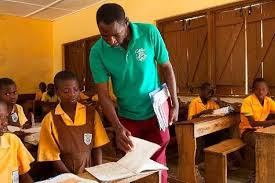
Africa Education Watch, an education policy think tank, has revealed that approximately 30,000 classrooms across Ghana still do not have teachers.
According to the organisation, the situation is largely due to persistent inefficiencies in teacher distribution, which have left many rural schools severely understaffed.
Speaking at a press briefing in Accra, Kofi Asare, Executive Director of Africa Education Watch, explained that the imbalance stems from the way teachers are deployed across the country.
“About 30,000 classrooms still lack teachers due to distribution inefficiencies, resulting in surplus postings in regional capitals, metropolitan areas, and urban municipalities,” he said.
Mr Asare noted that Ghana’s teacher deployment system remains heavily skewed, with a higher concentration of teachers in urban areas at the expense of rural communities.
“In some districts, nearly 20 per cent of primary schools are run by a single teacher,” he added, warning that such conditions negatively affect teaching and learning outcomes.
He stressed that the core problem is not necessarily a shortage of teachers, but rather the unequal distribution of the available workforce.
“Ghana currently has about 15,000 more teachers than required to meet the teacher-to-pupil ratio at the primary level,” he said. However, he pointed out that shortages still exist at the Junior High School level, particularly in STEM subjects.
Mr Asare cautioned that without a strategic, data-driven approach to teacher deployment, the disparity between well-resourced urban schools and underserved rural classrooms will continue to grow.
7,000 jobs for 40,000 applicants
Meanwhile, the Ministry of Education has secured approval from the Ministry of Finance to recruit 7,000 teachers.
The Minister for Education, Haruna Iddrisu, disclosed that more than 40,000 applicants applied through the recruitment portal for the limited vacancies.
He explained that financial constraints have restricted the government’s ability to hire more teachers, despite increasing demand nationwide.
Speaking at the launch and communications briefing for the 19th edition of the eLearning Africa Conference on Tuesday, April 14, Mr Iddrisu addressed concerns about the scale of the recruitment.
“If resources were available, we would be employing up to 50,000 teachers across the country. However, due to budgetary constraints, we are unable to do so,” he said.
“The Ministry of Education sought and received clearance from the Ministry of Finance to recruit 7,000 teachers with degrees and diplomas. The process has been advertised in an open and transparent manner,” he added.
Publish Teacher Posting Plan
Africa Education Watch has also called on the government to publish a detailed teacher posting plan, including district-level quotas for the distribution of the newly recruited teachers.
Mr Asare urged transparency in both recruitment and deployment, in line with the President’s directive on decentralised teacher postings.
“The Ghana Education Service must publish a teacher posting plan indicating quotas for all teacher-deprived districts that will receive the 7,000 teachers,” he said.
He explained that such transparency would enable civil society organisations and the media to monitor how effectively teachers are distributed across districts.
“This will allow us to track deployment at the district level and provide feedback to the Ministry of Education to ensure effective policy implementation,” he added.
Mr Asare further revealed that EduWatch intends to file a Right to Information (RTI) request with the Ghana Education Service to obtain the necessary data.
“We will work with partner NGOs across rural Ghana to monitor teacher deployment down to the school level and report our findings to the ministry,” he said.
Comments are closed.