
AMBULANCE SERVICE IN CRISIS! Lives at Risk as 127 Vehicles Break Down
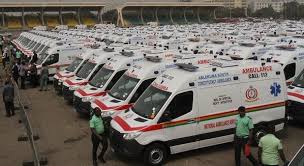
Ghana’s emergency response system is under severe strain as nearly 40 per cent of ambulances operated by the National Ambulance Service (NAS) are currently out of service.
Out of 318 ambulance stations nationwide, only 191 vehicles are operational, leaving 127 grounded. The development has sparked concerns about the country’s capacity to respond swiftly to medical emergencies. Authorities attribute the situation largely to an ageing fleet and the lack of timely replacement.
The Clinical Auditor for the Southern Zone of the NAS, Martin Ewuah Amoah, disclosed in an interview on Channel One TV that urgent government intervention is needed to replace the defective vehicles.
“We have 318 stations, but currently 191 are in commission and 127 are out of commission for obvious reasons. An ambulance has a lifespan of five years. After that, steps must be taken to replace them.”
Ambulances Beyond Lifespan
Adding his voice to the concerns, Dr. Simon Akayiri Nyaaba, Deputy Director for Policy, Planning, Monitoring and Evaluation at the NAS, said most ambulances in operation have exceeded their recommended five-year lifespan, particularly given Ghana’s road conditions.
Speaking on Joy FM, Dr. Nyaaba noted that ambulances introduced in 2019 have already outlived their expected service period.
“The lifespan of an ambulance is five years, and that is not even considering Ghanaian road conditions. From 2019 to date, all the ambulances brought in at the time have passed their lifespan and are experiencing one difficulty or another,” he stated.
He explained that the ageing fleet has significantly increased maintenance demands, with several ambulances spending more time in workshops than responding to emergencies.
Dr. Nyaaba therefore called for urgent investment in fleet renewal and improved resource planning to enhance emergency response and ease pressure on tertiary health facilities.
The concerns come on the heels of the tragic death of 29-year-old Charles Amissah, who was involved in a hit-and-run accident at the Circle Overpass in Accra on February 6, 2026.
Mr. Amissah, an engineer with Promasidor Ghana Limited, producers of Cowbell milk and other food products, was reportedly stabilised by Emergency Medical Technicians from the NAS. However, he was allegedly turned away by three major hospitals — Greater Accra Regional Hospital, Korle-Bu Teaching Hospital and Police Hospital — over nearly three hours due to lack of bed space. He later died.
The incident has reignited debate over emergency healthcare delivery and the urgent need to strengthen both pre-hospital and hospital response systems nationwide.
Comments are closed.