
BOG Governor Supports Export Commodity Value Addition Agenda
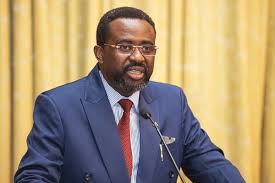
The Governor of the Bank of Ghana (BOG), Dr Johnson Asiama, has joined Ghanaians in calling for value addition to the country’s commodity exports.
According to Dr Asiama, limiting the economy to the export of raw primary products exposes the country to external shocks. The global prices of the commodities become the determining factor of the country’s GDP.
The Ghanaian economy mainly depends on raw material exports to fuel its trade balance and economic growth. Ghana’s main export commodities are cocoa, gold, and oil, which are exported as primary products without processing to increase revenue.
“Fact remains that we are basically another commodity-exporting country. What do we export? Three items: oil, cocoa, and gold, and most of them we export as primary products. When you are a country like that, you are always exposed to external shocks” Dr Johnson Asiama, Governor of BOG said.
Dr Johnson Asiama, Governor of BOG, stresses the need for the country to deviate from the “business as usual” standards and create a new growth path that increases the country’s returns.
He urged the government to operationalize refineries and factories that can mitigate the inadequacies of the industrial sector and its inability to influence economic growth.
Recent data from the Ghana Statistical Service (GSS) revealed that the industrial sector grew by 2.4 percent in the first three quarters of 2025 and by 0.8 percent in the third quarter of 2025. The sector lags behind the other sectors due to consistent neglect.
“Can we do more and more processing, more value addition to the items that we export? Talking about oil, can we process some more of that ourselves? Talking about gold, can we process some more of that? Some gold refineries have been set up. Can we get them to be very active?
“And then, cocoa, can we not set up cocoa factories in Switzerland to produce the chocolates there? So, there are various ideas to process more, and for me, that is one thing I would want to see” Dr Johnson Asiama added.
As one of the contributors to the appreciation of the Ghana cedi is the recent weakening of the United States dollar. Dr Asiama explained that the strengthening of the United States Dollar would affect global prices and, in turn, the Ghanaian economy.
He therefore urged that the raw material export syndrome, serving as a vulnerability to the economy, be addressed. Intentionality is needed to enact significant reforms to ensure growth and economic resilience.
“If the U.S. dollar strengthens for any reason, that will have a very significant impact on us. And so, I worry that we tackle some of these vulnerabilities.
“If we can add more value, that will address our vulnerabilities and help to preserve the stability we’ve been able to achieve in this first year. So, that is always at the back of my mind.”
The economic gains need to be protected by making some of these necessary restructurings to complement the monetary policy reforms the Bank of Ghana has put in place.
Structural Reforms
The Governor reiterated that the Bank of Ghana is confident in the measures taken to stabilize the economy, particularly on the financial side.
He expressed satisfaction with the work done by the Bank, as more reserves are kept to cushion any shock that might arise.
He, therefore, urged the government to persist in its structural reform programs that have been assured to the people of Ghana. Many structural reforms have been noted in the 2026 Budget. Therefore, he is poised that 2026 will take Ghana to the next level in the country’s growth and development.
“We are doing our part by building adequate reserves. That’s one of the things we can do. But I want to see more of the structural programs. I see some of that in the [2026] budget, which is very good.”
Structural reforms are the only means to establish the foundation of growth and prosperity for the country. The reforms might be unpleasant, but necessary to restore the health of the economy.
Structural reforms target the broader economic reset to boost the real or productive sector and focus on specific economic-changing initiatives.
According to Dr Asiama, “the Bank of Ghana is working closely with the Finance Minister, and we [Bank of Ghana] discussed these things [value addition and structural reforms] at length,” adding that “I want to believe that these are going to be pursued aggressively, and things should be alright.”
Comments are closed.