
Cocoa Farmers Weep In Regret
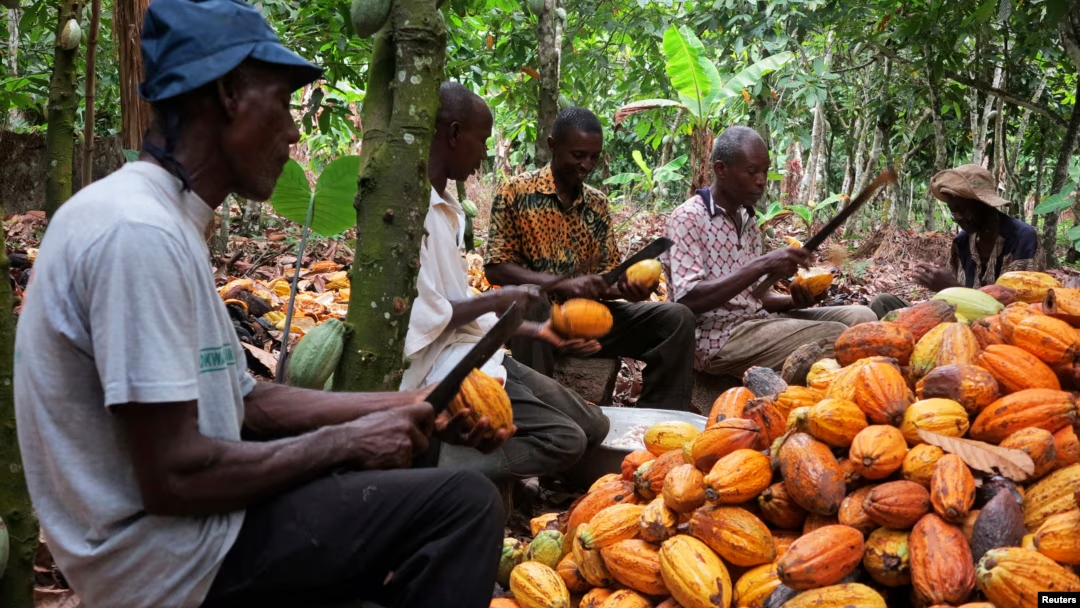
Deepening frustration has erupted among cocoa farmers in the Ashanti Region, who are urging the government to revert to the previous producer price for cocoa.
They point to the track record of the former Akufo-Addo administration, which managed to shield the sector from price cuts despite the severe economic turbulence caused by the COVID-19 pandemic.
The farmers contend that if the previous government could uphold stability—keeping the economy afloat, paying public sector salaries, and maintaining utility tariffs without touching the cocoa price—then the current administration under John Mahama has no justification for reducing their income. They describe the slash as a harsh blow to their survival.
This wave of discontent surfaced during a fact-finding tour by the Minority Caucus, led by Chief Whip Frank Annoh-Dompreh, through cocoa-farming communities in the Atwima Mponua Constituency. The visit, part of a wider national engagement, became a venting ground for farmers angered by the government’s decision to chop the producer price from GH¢3,625 to GH¢2,587 per bag—a steep drop of nearly 28.6 percent.
For the farmers, the timing couldn’t be worse. With the soaring costs of fertilizers, labour, and transportation, they argue that the new price makes cultivation unsustainable. Many disclosed that although officials have promised the release of funds, payments for beans already delivered remain outstanding, plunging households into financial chaos. Basic needs like food, school fees, and healthcare have become difficult to meet.
Licensed buyers and purchasing clerks are also caught in the crunch. Unable to secure fresh funds from COCOBOD, many have stopped buying altogether, causing a collapse in the supply chain. Farmers in towns like Adiembra and Agogoso report that their beans are now being turned away at collection points.
The economic strain is pushing some farmers toward drastic choices. Several admitted they are now open to illegal mining—galamsey—if gold is found on their land, viewing it as a quicker route to income than the struggling cocoa sector. A veteran licensed buyer with over 30 years in the trade confessed he has lost all enthusiasm for the business, weighed down by unpaid arrears and an unpredictable future.
The Minority Caucus did not hold back in its condemnation. Annoh-Dompreh labelled the price reduction a “rip-off,” insisting that farmers must not carry the weight of global market instability alone. He called for government intervention through bailouts or subsidies, and questioned the administration’s spending priorities—especially amid talks of purchasing a new presidential jet.
“If you can borrow to buy a jet but refuse to borrow for farmers, don’t expect the farmers to remember you at the polls,” he warned, a remark that resonated deeply with the crowd.
Other legislators, including Isaac Yaw Opoku of the Food and Agriculture Committee, cautioned that the sector risks total collapse if nothing is done. He hinted at rumours of even further cuts and urged farmers to stand firm in demanding accountability.
Across other communities like Dannso and Asante Akyem Ofoase, the sentiment was the same: the current price barely covers production costs. Farmers accused the ruling NDC of betraying campaign promises, recalling assurances of a GH¢6,500 per bag price. Instead, they say, the government has reduced the very price it inherited.
The human toll was visible. Elderly women broke down in tears as they recounted their struggles. Some warned of looming mass protests, while others said they are ready to walk away from cocoa farming entirely, a move that would deliver a heavy blow to Ghana’s economic backbone.
Comments are closed.