
Ghana Among Highest Debt Countries in Africa
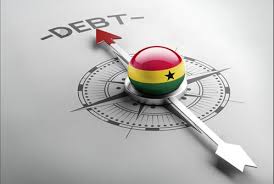
The International Monetary Fund, IMF, has updated its data on the countries with the largest debt to the Fund as of December 5, 2025.
According to the IMF’s recent data on debt, Ghana is the fifth most indebted African country to the Fund behind Egypt, Cote d’Ivoire, Kenya, and Angola, with a debt of SDRs 2,583,583,500, equivalent to US$ 3.5 billion (around GHȻ 40.3 billion), which is about 3.24% of Ghana’s GDP.
Countries turn to the IMF to stabilize their economies under pressure from inflation, weakening currencies, and declining public revenues. However, the dangers increase with the dependence on IMF loans.
Ghana, over the last 68 years, has turned to the IMF 17 times for relief from various economic challenges. The country is currently under an IMF-support program to end in May 2026.
The data includes 86 countries with different debt amounts. The total debt owed by these countries is SDRs 118,582,464,463, which equals US$ 162.4 billion. Argentina has the highest debt with SDRs 41.8 billion, followed by Ukraine with over SDRs 10.3 billion and Egypt with SDRs 6.9 billion (about US$ 9.4 billion).
The three countries that owe the most make up almost half of the total, while the top 10 countries owe 73 percent of the total debt.
The amount of money owed to the IMF is typically expressed as Special Drawing Rights (SDRs), which is the IMF’s own unit of account based on a basket of five currencies – the US dollar, euro, pound sterling, the Chinese renminbi, and the Japanese yen. While SDRs are not a currency, countries can exchange them for currencies. Currently, one SDR is equivalent to US$ 1.37.
IMF Support Program
The IMF promotes sustainable growth and prosperity for all 191 member countries. The Fund supports economic policies geared towards financial stability and monetary cooperation to increase productivity, create job opportunities, and improve the economic prospects of countries.
IMF members work towards achieving the Fund’s mission; furthering international monetary cooperation, inspiring the expansion of trade and economic growth, and discouraging policies that would harm prosperity.
IMF support through credit gives validity and funding to member countries in critical economic downturns. However, experts are beginning to question the true purpose and impact of these funds, especially for African countries.
Some economists argue that, contrary to the mission and objectives of the Fund, supported countries do not achieve sustainable growth, prosperity, employment growth, and long-term recovery from the initial downturn.
For this reason, countries like Ghana repeatedly seek the Fund’s support, adding to the country’s debt.
The existing argument is that much exposure to the IMF restricts the policy flexibility of countries, as well as how governments set interest rates, administer subsidies, and allocate spending.
The conditionalities end up crippling the financial sovereignty of countries and preventing governments from spending in sectors that are peculiar to the growth and development of the respective countries.
Through a multi-pronged strategy, the Fund has championed Ghana’s fiscal reform implementations, such as fiscal discipline, expenditure cuts, and revenue increases.
The Fund has again promoted structural economic growth, debt restructuring with creditors (as seen recently, haircuts, extensions on private and official debt), and the Ghana Cedi’s stabilization through monetary policies. These are carefully spelled out in strict conditionalities subject to periodic reviews.
The Fund’s purview points to Ghana attaining a sustainable economic footing. However, many experts, again, ask whether the 17 loops have achieved this objective, while the country’s debt to the IMF grows, exceeding GHȻ 40 billion.
According to the IMF data, unlike some countries like Malawi and Sierra Leone, which have made some repayments, Ghana has not made any repayment recently.
Comments are closed.