
Ghana’s emergency health system a political and systemic problem – CDD Fellow
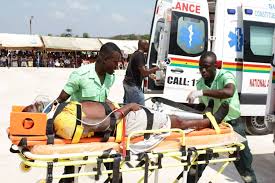
Research Fellow at the Centre for Democratic Development (CDD-Ghana) Dr. Kwame Asiedu Sarpong has described Ghana’s health emergency system as a political and systemic problem rather than purely a medical one, highlighting long-standing weaknesses that put patients at risk.
His comments come in the wake of the tragic death of 29-year-old engineer Charles Amissah, who lost his life after a hit-and-run crash at the Circle Overpass in Accra on February 6, 2026.
Reports indicate that Amissah was turned away by three major hospitals, including Police Hospital, Ridge General Hospital, and Korle Bu Teaching Hospital, due to a lack of bed space, even as Emergency Medical Services personnel attempted to stabilise and transport him.
Speaking on Citi FM’s The Big Issue on Saturday, February 21, Dr. Sarpong explained that healthcare relies on proper diagnosis, timely action, and accurate prognosis.
He cited two key assessments of Ghana’s health sector—the Holistic Assessment of Health Programme of Works (May 2024) and the Health Harmonization Assessment Report (2023)—both of which reportedly show that patients entering emergency care face a higher likelihood of death than survival if the system fails to respond efficiently.
Dr. Sarpong said cases like Amissah’s illustrate the urgent need for systemic reforms, including improved emergency resources, better hospital readiness, and more effective coordination between facilities.
He warned that without addressing these structural issues, emergency situations will continue to result in preventable deaths.
Dr. Sarpong noted that “It is a political rather than a health problem, so to speak, and I would explain. Health relies on two things at the end of the day: you diagnose, and based on the diagnosis, you act, and based on the diagnosis and action, you get a prognosis, and that prognosis leads to an outcome. That is simply how health operates…The point is that when you are intervening at a diagnosis point, you need tools, whether you like it or not, and that is why it is a system and a people’s problem because Ghana knows the state of our emergency system.
“There are two documents that were released that did a diagnosis of our health system…There is one called the holistic assessment of health programme of works, released in May 2024, and there is a health harmonisation assessment report also released in 2023…In the diagnosis, it told us clearly that if someone gets into an emergency order, the likelihood of them passing away was higher than them being saved.”
Review
On the same show, Dr. Kwame Asiedu Sarpong, urged a thorough and candid investigation into the shortcomings of Ghana’s health system, warning that political and economic inaction continues to endanger lives.
Dr. Sarpong said the focus should not be on blaming health professionals or individual hospitals, but on addressing systemic gaps from a political and economic perspective.
“There needs to be an honest and candid investigation, not by way of finger pointing or blaming the system, but to ask whether we have truly confronted the problems in our health system from the start,” he said.
“We know the problem, we know the solution, yet we fail to make the necessary political and economic investments. Then we wait for poor outcomes to happen and start making politics out of the situation.”
Comments are closed.