
Gov’t Probes Korle Bu, Ridge & Police Hospitals Over Neglect of Patient to Die
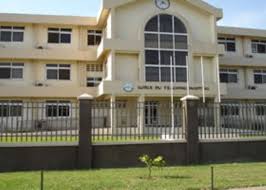
Government is set to launch a full-scale investigation into circumstances surrounding the death of a patient who was reportedly turned away from three major health facilities in Accra – the Korle Bu Teaching Hospital, the Greater Accra Regional Hospital (Ridge) and the Police Hospital in what family members have described as a tragic case of neglect.
Minister of Health, Kwabena Mintah Akandoh has served noticed that, he would personally chair the said investigation committee to ascertain the reason(s) behind such unfortunate incident that took the life of an innocent man.
The incident, which has sparked widespread outrage on social media involves a 29-year-old Charles Amissah, an engineer who was rushed to the 3 hospitals in critical condition but was denied admission with the explanation of “no vacant bed available,” and later died.
The victim is said to have been involved in a hit-and-run accident at Nkrumah Circle Overpass in Accra whiles on his motor bike from work to his residence in Adenta last Friday [February 6, 2026].
Accounts from relatives suggest the patient was first taken to the Police Hospital, where they were informed that there were no available beds.
The Emergency Medical Technicians (EMT) from the National Ambulance Service then took the patient to the Greater Accra Regional Hospital (Ridge) where admission proved unsuccessful before Korle Bu Teaching Hospital where he was pronounced dead after 30 minutes arrival.
In all, the patient was transported through the three hospitals in Accra for about 3 hours, with no hospital staff attending to the casualty, nor were vital signs taken in any of the three hospitals.
Speaking on Eyewitness News on Citi FM on Friday, February 13, the Minister expressed deep concern over the reports stating that, “I was devastated when I heard that somebody had lost his life through this ordeal. We are going to investigate this matter. By Monday, the committee should be in action, and I am going to chair it myself. We will invite all interested parties and get to the bottom of the matter”.
In addition to the investigation, the Minister disclosed motives to create a centralized contact center to track hospital room availability. He said that the program, which is a component of larger reforms the Ministry is considering, would give real-time awareness of available beds and route patients to institutions with capacity.
In related development, families who lose loved ones as a result of the nation’s “no bed syndrome” are being urged by Chairperson of Parliament’s Health Committee, Dr. Mark Kurt Nawaane, to pursue legal action against medical facilities that reject emergency care.
Speaking to journalists, the Honourable Member of Parliament for Nabdam, strongly condemned the situation, calling the denial of admission to emergency patients unacceptable and inhuman.
“You carry your relative to the place, and if you’re not satisfied with anything, I think you should be able to pursue it. The Medical and Dental Council are there to ensure that we provide quality health services. We have got HeFRA (Health Facilities Regulatory Authority). We’ve got even the NHIA, they are interested in this matter. So, all these bodies are there to ensure that you can make a formal complaint to them, and I believe that they will be able to do so.
He continued, “When it is an emergency, we expect that you stabilise the person first. Even if you need to refer, you do so after stabilization. There are so many hospitals in the country. Even the specialist hospitals in Accra are not that small. What I am thinking is that there is a lack of communication between hospitals. If you go to the first hospital and there is no bed, they should be able to inform you that there is a bed in another hospital. But it appears every hospital is operating like an island”.
The incident has triggered renewed calls for reform in Ghana’s emergency care framework. Civil society groups have criticized what they describe as systemic failures in referral coordination and bed management across the capital’s major hospitals.
Health policy analysts argue that while infrastructure expansion is ongoing, operational inefficiencies, inadequate real-time bed tracking systems and limited critical care capacity remain persistent challenges.
Comments are closed.