
Gov’t Urged to Cushion Rising Fuel Prices with Petroleum Funds
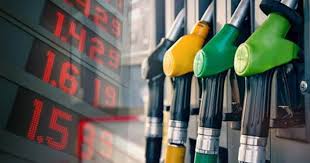
Energy and Associates Ghana has called on government to consider deploying the Ghana Petroleum Funds to cushion consumers against temporary spikes in pump prices, warning that rising crude oil prices could trigger a fresh cost-of-living crisis.
In a statement signed by its Director of Operations, Research and Communication, Ibrahim Kwame Baidoo, the policy think tank argued that Ghana’s unique position as both a marginal oil exporter and a significant importer of refined petroleum products presents a delicate economic balancing act.
According to the group, the ongoing U.S.–Iran conflict has intensified volatility in global energy markets, exposing structural vulnerabilities in Ghana’s economy.
The think tank believes that Ghana can use the Ghana Petroleum Funds strategically to smoothen short-term price shocks.
By leveraging these funds to subsidize temporary spikes in pump prices, government could protect households and businesses from sudden fuel cost increases that often cascade into higher transport fares, food prices and utility bills.
The proposal comes at a time when Ghana’s oil production, which declined to roughly 36 million barrels in 2025, is in what the group describes as a recovery phase under the 2026 Budget’s “Resetting for Growth” strategy.
Higher global oil prices, the statement indicated, will increase inflows into the Petroleum Holding Fund (PHF), potentially creating additional fiscal space to finance the government’s “Big Push” infrastructure programme.
However, the think tank cautioned that relying solely on export revenue gains without mitigating domestic price impacts could undermine macroeconomic stability.
“Double-Edged Sword”
Energy and Associates Ghana described the current geopolitical environment as a “double-edged sword” for the country.
“As a country balancing its status as a marginal oil exporter and a significant importer of refined petroleum, this conflict presents a double-edged sword scenario. While it bolsters oil export revenues, it simultaneously threatens macroeconomic stability through imported inflation and increased power generation costs” Ibrahim Kwame Baidoo, Director of Operations, Research and Communication.
The recommendation follows a sharp surge in crude oil prices after joint U.S.–Israeli strikes on February 28, 2024. Brent crude prices reportedly spiked by approximately 8.5 percent within 48 hours, climbing to between $79 and $82 per barrel.
Analysts at Goldman Sachs and J.P. Morgan have suggested that a prolonged disruption could push crude prices toward $100 to $120 per barrel.
Increased insurance premiums for maritime transit and the risk of retaliatory strikes on regional energy infrastructure are already being factored into global oil prices.
Energy and Associates Ghana acknowledged that higher oil prices typically attract upstream investment. However, it warned that prevailing global uncertainty could produce a “risk-off” sentiment among investors.
The statement noted that capital flight from emerging markets remains a possibility during periods of geopolitical tension, potentially affecting Ghana’s broader economic outlook.
Nonetheless, the group highlighted ongoing commitments by key industry players as a stabilizing factor. Major partners such as Tullow Oil and Kosmos Energy have already made investment commitments in the Jubilee and TEN fields, providing a buffer against market volatility.
These commitments, the think tank argued, reinforce confidence in Ghana’s upstream petroleum sector despite global uncertainties.
While upstream revenues may improve, the downstream sector remains highly exposed to the cost of refined petroleum products, including petrol, diesel and liquefied petroleum gas.
The recent surge in global crude prices is expected to reverse the relative price stability observed in January 2026, potentially translating into higher pump prices during upcoming pricing windows.
Energy and Associates Ghana emphasized that Ghana’s energy security remains closely tied to international refined product markets. Even with domestic crude production, the country’s heavy reliance on imported refined products makes it vulnerable to global price swings.
Increased power generation costs, especially for thermal plants reliant on imported fuels, could also compound the economic impact.
Proactive Response
Energy and Associates Ghana’s recommendation to tap the Ghana Petroleum Funds is framed as a temporary stabilization measure rather than a permanent subsidy regime.
The think tank stressed that the objective should be to prevent abrupt price shocks that could destabilize households and businesses while preserving long-term fiscal sustainability.
Comments are closed.