
Mexico’s Most Wanted Drug Lord ‘El Mencho’ Killed
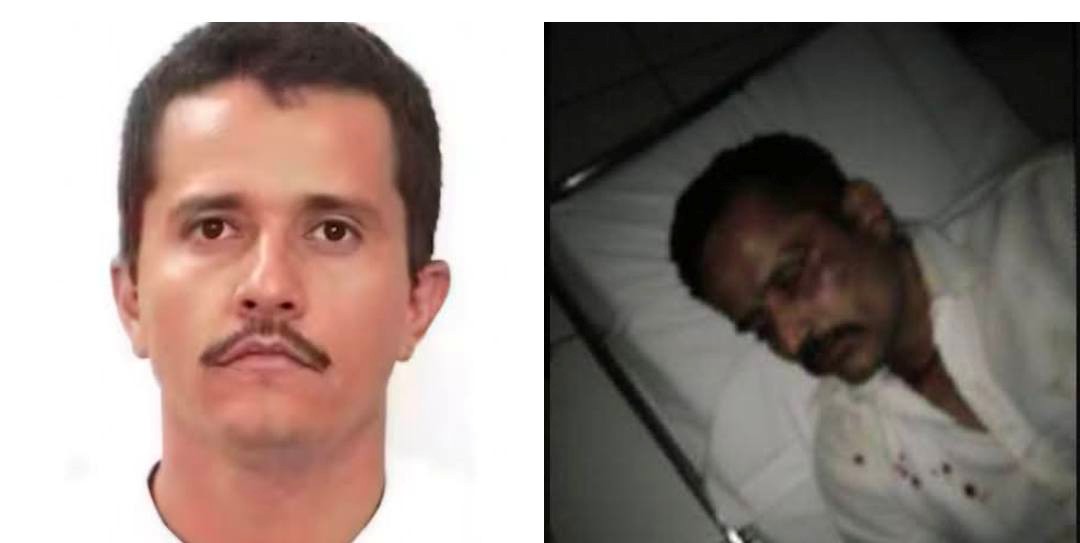
In a military raid supported by the United States, Mexican forces have located and killed one of the country’s most wanted drug lords, Nemesio Oseguera Cervantes, also known as “El Mencho”.
The killing of El Mencho on Sunday triggered immediate violence across Mexico. Armed men set vehicles on fire and blocked roads in at least 20 states. Authorities continue to work to restore order.
El Mencho was the leader of the Jalisco New Generation Cartel, operating from the western state of Jalisco. The cartel is known for its large military-style arsenal. He was 59 years old when killed and hailed from the neighbouring state of Michoacan. Rumors suggest he was once a police officer before turning to a life of crime.
He rose in Mexico’s drug world in the 1990s. In 1994, he was convicted in the United States for heroin trafficking and served nearly three years in prison before returning to Mexico. Over the years, he became infamous for his violent tactics.
There are several reports of his extreme methods. Rolling Stone magazine reported in 2015, quoting an unnamed former DEA agent, that he once sent a severed pig’s head in an ice chest to a Mexican lawyer as a warning. In another instance, a recorded call caught him threatening a local police commander with the call sign “Delta One”, saying he would kill him “and even your dogs” if his officers did not back off, ending the call with “sorry for the bad language”.
As his influence grew, El Mencho invested in submarines to transport drugs from South America to the US. Rolling Stone reported that he even hired Russian naval engineers to design the submarines. He became one of Washington’s most wanted fugitives, with the US offering a $15 million reward for information leading to his arrest.
Annette Idler, an associate professor at the University of Oxford, told Al Jazeera that El Mencho’s death is “symbolically important because he was central to the Jalisco Cartel’s transformation into one of the most powerful and globally connected criminal organisations.” She added that the cartel played a major role in fentanyl production linking Mexico to China, and cocaine trafficking networks linking it to South America, particularly Ecuador and Colombia.
El Mencho founded the cartel in 2009. He rapidly expanded it through online recruitment and by diversifying income streams, including fuel theft, extortion, and timeshare scams. The US has identified the Jalisco and Sinaloa cartels as the main groups trafficking fentanyl into the country. The DEA considers the Jalisco Cartel as powerful as Sinaloa, active in all 50 US states and in 21 of Mexico’s 32 states.
The cartel is notorious for attacking Mexican security forces. In 2015, it shot down a military helicopter in Jalisco. In 2020, it attempted to kill then-Mexico City police chief Omar Garcia Harfuch, now federal security secretary. In February last year, Mexico handed over El Mencho’s brother, Antonio Oseguera Cervantes, to the US. This followed the US designating eight Latin American criminal organisations, including the Jalisco Cartel, as “global terrorist organisations”.
El Mencho was killed by Mexican special forces during an operation in Tapalpa, southern Jalisco. Troops attempted to arrest him, and his followers resisted. Mexican President Claudia Sheinbaum said on X that the operation was conducted by federal forces:
“My recognition to the Mexican Army, National Guard, Armed Forces, and Security Cabinet.”
White House press secretary Karoline Leavitt confirmed on X that the US provided intelligence support:
“In this operation, three additional cartel members were killed, three were wounded, and two were arrested.”
Experts note US involvement in capturing Mexican drug bosses is common. Benjamin Smith, a professor at the University of Warwick, said, “This is not new.” Vanessa Rubio-Marquez of the London School of Economics added that cooperation is crucial:
“As a transnational activity that includes import of precursors, production, trafficking, consumption, money laundering, flow of arms, extortion and corruption from both sides of the border, both countries need to work together to combat these organisations and their unlawful activities and being able to protect citizens.”
Violence on Sunday claimed at least 14 lives, including seven National Guard members, in states like Jalisco, Michoacan, and Guanajuato. Guadalajara, Jalisco’s capital and a World Cup host city, shut down. Social media showed passengers running in panic at airports, and smoke rising over Puerto Vallarta. Authorities closed schools, suspended public transport, and urged residents to stay home.
Despite the violence, most Mexicans support government action against cartels. Idler said, however, that US involvement could trigger criticism. Analysts warn that a power vacuum in the cartel may cause more violence. Smith said, “I suspect this killing will reverse the trend” of falling homicides. Idler added that drug trafficking is unlikely to decrease immediately.
The future of the Jalisco New Generation Cartel remains uncertain. Rubio-Marquez emphasized:
“The fight against criminal actors is not only about getting rid of leaders… it implies a complex strategy that includes prevention, the combat of powerful arms used by cartels, disarticulation of their networks, security for citizens, and effective policies towards social inclusion and economic development.”
Source: Al Jazeera
Comments are closed.