
National Ambulance Service Denies 127 Ambulances Are Out Of Service
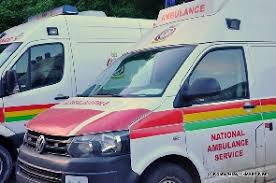
The National Ambulance Service (NAS) has clarified media reports suggesting that 127 out of its 318 ambulances are permanently grounded, describing the figures as a temporary operational snapshot rather than a fixed situation.
In a statement issued on Tuesday, February 24, the Service explained that while a number of ambulances are currently undergoing maintenance and repairs, the figure cited in the media does not reflect a permanent reduction in the fleet.
According to NAS, ambulances routinely move in and out of service as part of standard operational procedures, including scheduled maintenance, emergency repairs and technical servicing.
The Service noted that some faults are resolved within hours, while others may take several days depending on the complexity of the issue and the availability of spare parts.
“As a result, the number of ambulances temporarily unavailable for service fluctuates daily,” the statement said.
The Service stressed that the reported figure of 127 ambulances under maintenance should not be interpreted as a permanent deficit, explaining that the number constantly changes as vehicles are repaired and returned to service, while others are taken in for routine checks.
“Fleet rotation and maintenance are standard operational practices necessary to ensure safety, reliability, and optimal performance of emergency medical vehicles.
“Keeping ambulances roadworthy is essential to protecting both patients and Emergency Medical Technicians (EMTS),” part of the statement read.
Read full statement below:
FOR IMMEDIATE RELEASE
Tuesday, 24th February, 2026
NATIONAL AMBULANCE SERVICE CLARIFIES REPORTS ON OPERATIONAL STATUS OF AMBULANCE FLEET
- Management of the National Ambulance Service (NAS) has taken note of media publications suggesting that 127 out of the Service’s 318 ambulances are grounded.
- While the Service acknowledges that a portion of the fleet is currently undergoing various levels of maintenance and repair, it is important to clarify that the figure referenced represents a dynamic operational snapshot and not a fixed or permanent situation.
- Ambulances routinely move in and out of service as part of scheduled maintenance, emergency repairs, and technical servicing. Some repairs are completed within hours, while others may take several days depending on the complexity of the fault and availability of parts. As a result, the number of ambulances temporarily unavailable fluctuates daily.
- For the avoidance of doubt and misinterpretation, the reported figure of 127 is not a permanent deficit of grounded vehicles. It is a variable number that constantly evolves as ambulances are returned to service and others are scheduled for maintenance.
- Fleet rotation and maintenance are standard operational practices necessary to ensure safety, reliability, and optimal performance of emergency medical vehicles. Keeping ambulances roadworthy is essential to protecting both patients and Emergency Medical Technicians (EMTs).
- Despite ongoing maintenance activities, the National Ambulance Service continues to provide nationwide emergency response coverage. Dispatch operations remain active 24 hours a day, seven days a week, and ambulances are being deployed daily to respond to medical emergencies across the country.
- The National Ambulance Service wishes to assure the general public that:
- NAS remains operational nationwide and continues to respond to emergency calls. The number of ambulances under-maintenance is not static and changes as vehicles are repaired and restored to service.
- Routine maintenance is a necessary and responsible measure to ensure patient safety and operational efficiency.
iii. Emergency services have not been suspended, and lifesaving interventions continue across all regions.
- NAS remains committed to transparency, accountability, and continuous improvement in service delivery.
- The Service remains resolute in its mission to provide timely, quality pre-hospital emergency care and to safeguard the health and lives of the people of Ghana.
SIGNED:
Mr. Simmons Yussif Kewura
Deputy Director, Public Relations
Comments are closed.