
New Ghana Card Fees Start in February, NIA Announces
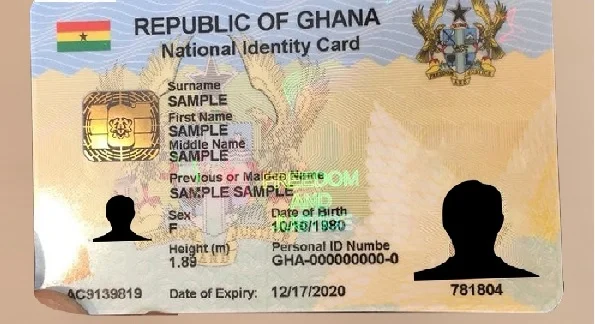
The National Identification Authority (NIA) will introduce new fees for Ghana Card services starting Monday, February 2, 2026, following approval by Parliament.
The Authority announced that from the effective date, replacing a Ghana Card at NIA district offices will cost GH¢200. The new charges were contained in a press release issued on Monday, January 26, 2026, and approved under the Fees and Charges (Miscellaneous Provisions) (Amendment) Regulations, 2025, L.I. 2512, in November 2025.
Under the revised fee structure at district offices, first-time registration will remain free for persons below 25 years. Applicants aged 25 years and above will pay GH¢30 for first-time registration. Annual renewal of the Ghana Card will cost GH¢150, while nationality updates will attract a GH¢200 fee.
The NIA also explained that record updates that do not require card replacement will continue to be free at district offices. However, record updates that involve replacing the card will cost GH¢200. Card transfer services, excluding courier charges, will cost GH¢75.
For services under the Foreigner Identification Management System, first-time registration will cost the cedi equivalent of 120 United States dollars. Annual renewal will cost the cedi equivalent of 78 dollars, while multiple-year renewal for at least two years will cost the cedi equivalent of 75 dollars per year. Card replacement will cost the cedi equivalent of 78 dollars, and nationality updates will cost the cedi equivalent of 120 dollars. Record updates with card replacement will cost the cedi equivalent of 70 dollars, while record updates without replacement will remain free.
At NIA Premium Centres, first-time registration will cost GH¢410, while card replacement will cost GH¢520. Card renewal, nationality updates, and record updates with card replacement will each cost GH¢410. Record updates without card replacement at Premium Centres will cost GH¢165.
Explaining the reason for the new charges, the Authority said the review was done in line with the Fees and Charges (Miscellaneous Provisions) Act, 2022, Act 1080, which requires public institutions to regularly review their fees.
“The NIA has operated under the 2023 fee structure for over two years, during which operating costs have increased cumulatively without corresponding fee adjustments,” the statement said.
It added that high costs related to technology licensing, cybersecurity services, utilities, logistics, and personnel have placed pressure on operations. According to the Authority, “The Ghana Card has evolved into critical national infrastructure, and its long-term sustainability requires periodic, modest fee realignment after prolonged cost absorption regardless of exchange rate movements.”
The NIA assured the public that the new fees will be applied transparently and responsibly to strengthen the national identity system and support governance, service delivery, financial inclusion, and national development.
The statement was signed by Mr. Williams Ampomah Emmanuel Darlas, Head of the Corporate Affairs Directorate of the National Identification Authority.
Comments are closed.