
NPP, NDC, and CPP Sued Over Party Candidate Selection
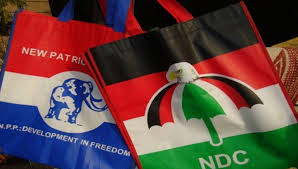
Three senior public figures have asked the Supreme Court to rule that the way major political parties in Ghana choose their candidates is unconstitutional.
Former Environment Minister Prof. Kwabena Frimpong-Boateng, veteran politician Dr. Nyaho Nyaho-Tamakloe, and former Education Minister Dr. Christine Amoako-Nuamah have filed a lawsuit challenging the delegate-based systems used by the New Patriotic Party (NPP), the National Democratic Congress (NDC), and the Convention People’s Party (CPP) to elect their presidential and parliamentary candidates.
According to the writ filed in January 2026, with the day not clearly visible on the document, the three plaintiffs argue that the current systems allow only a small group of party executives and selected delegates to vote, leaving out the majority of ordinary party members. They claimed that this approach goes against the democratic values set out in Ghana’s 1992 Constitution.
They are asking the court to make constitutional declarations against the three political parties. They say political parties are not private groups but important public institutions through which citizens take part in governance and gain access to public office.
For this reason, they argue that how parties select their candidates is a key part of their “internal organisation” and must follow democratic principles such as equal and direct participation.
In their statement of case, the plaintiffs say the delegate system “severely disenfranchises” many party members and creates a small, powerful voting group.
“The delegate-based Electoral College system… which confines or restricts voting to specified executives… to the exclusion or material disenfranchisement of members in good standing of the party, contravenes the Preamble and Articles 1, 17, 33(5), 35(6)(d), 42 and 55(5) of the 1992 Constitution,” the plaintiffs stated.
The suit also names the Attorney-General and the Electoral Commission (EC) as defendants. The plaintiffs argue that the EC has failed in its duty to ensure that political parties operate in line with democratic principles, as required under Article 55(5) of the Constitution and Section 9(a) of the Political Parties Act, 2000 (Act 574). They claim the EC has “failed, refused, or neglected” to enforce these laws.
The case reviews how each party organises its internal elections. It notes that although the NDC once allowed all members to vote for its presidential candidate in 2015, it later returned to a delegate system. The plaintiffs say this shows the need for the Supreme Court to clearly explain what “democratic principles” mean when it comes to internal party elections.
The legal team, led by Oliver Barker-Vormawor, wants the court to declare the delegate systems unconstitutional and remove the affected provisions from the constitutions and electoral rules of the NPP, NDC, and CPP. They are also asking the court to order the parties to change their rules to allow equal, direct, and meaningful participation by all members.
The plaintiffs say the issue is especially important as Ghana approaches future elections, arguing that choosing candidates through a small elite weakens accountability between the people and the government.
“It would be constitutionally incoherent to demand equality and universality at the final election while tolerating exclusion and hierarchy at the decisive internal stage,” the writ concludes.
Comments are closed.