
Reflections from the NPP Primary
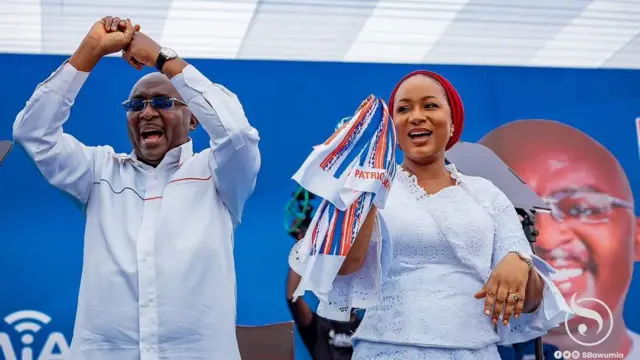
As the New Patriotic Party (NPP) brings its presidential primary process to a close, public attention has gradually shifted from policy proposals to the tone, language, and conduct that have characterised the internal contest. Regardless of the final outcome, the process itself offers an opportunity for reflection on political communication, reputation management, and party cohesion.
According to projections from various opinion pollsters, the contest has featured a clear frontrunner alongside other aspirants with notable levels of support. In the course of this heightened political engagement, past public statements attributed to some contenders have re-emerged in national discourse, particularly across social media platforms.
These statements, now widely circulated, have generated discussion that extends beyond the immediate primary contest.
Many of the remarks currently attracting attention were originally made during periods of intense political pressure, often in defence of the party, its leadership, or institutional decisions. Some were expressed in moments where loyalty and passion appeared to outweigh restraint.
Their reappearance, frequently in edited or partial form, underscores an important reality of modern politics: public statements have long lives and can resurface with consequences far removed from their original context.
This situation presents a valuable lesson, especially for emerging political actors. Political parties are evolving institutions. Leadership changes, strategic priorities shift, and internal dynamics transform over time. Personal reputation, however, remains relatively constant. Words spoken in defence of institutions or individuals may be revisited years later and interpreted differently by new audiences.
In public life, an individual’s record of speech and conduct forms a lasting part of the national memory. While political actors may change roles or positions within party structures, their public utterances remain accessible and influential.
For this reason, caution, discipline, and foresight in communication are essential to sustaining long-term credibility in public service.
Beyond individual considerations, the tone of the primary campaign has also raised broader concerns about internal party cohesion.
Competitive primaries are a vital feature of democratic politics and can strengthen parties by encouraging debate and participation. However, when political rhetoric becomes excessively confrontational or personalised, it risks deepening divisions that may persist beyond the contest.
A commonly referenced analogy in political commentary describes a family dispute in which harsh words are exchanged without regard for future reconciliation.
The lesson is instructive, political competition should preserve room for post-contest unity. Without such space, internal victories may inadvertently weaken collective strength.
Polling data further suggest that success at the delegate level does not automatically translate into national electoral success. General elections are won through broad-based mobilisation, inclusive messaging, and the active engagement of diverse support blocs within a party. Groups that feel marginalised or alienated during internal contests may influence turnout, campaign enthusiasm, and overall electoral performance.
As the party moves beyond the primaries, responsibility rests with leadership and key stakeholders to promote reconciliation, discourage inflammatory rhetoric, and refocus attention on shared objectives and national development priorities. Political maturity is reflected not only in winning internal contests, but also in the ability to unify differing perspectives afterward.
These reflections are offered in the interest of strengthening internal party democracy and Ghana’s broader political culture.
A measured approach to political communication, combined with a renewed commitment to unity, will serve both political institutions and the democratic process as a whole.
I rest my case
Socrate Safo
EDITOR’S NOTE: The author, Socrate Safo is a Ghanaian Film Director. He worked as a Creative Arts director at the National Commission on Culture.
Comments are closed.