
To Remove Kotoka’s Name at Ghana’s Airport: A Question of History & Memory
To truly appreciate history, one must listen closely and question continuously. One of the most striking realities about historical writing is that much of it is not authored by eyewitnesses. Instead, historians reconstruct the past through second-hand information, oral accounts, and documents passed down through generations.
This is not necessarily a flaw, but it reminds us that history, by its very nature, is an interpretation.
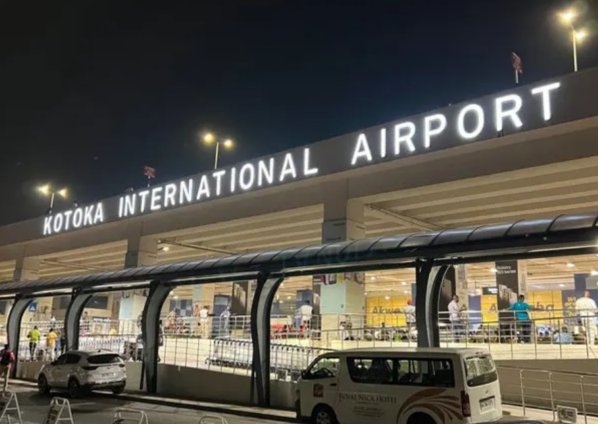
It is within this space of interpretation that a renewed national debate has emerged: should Accra’s main international airport be renamed, or should it continue to bear the name Kotoka International Airport?
Ghanaians today are divided over that matter. Those who support renaming the airport argue forcefully that national monuments should reflect democratic values and honour figures who unified the nation.
Those who oppose the change insist that history, however uncomfortable, should not be erased, and that Kotoka’s role must be understood within the context of his time.
At the heart of the debate lies a fundamental question: Who was Kotoka?
Lieutenant General Emmanuel Kwasi Kotoka was a senior officer in the Ghana Armed Forces and one of the most influential figures in Ghana’s political history of the 1960s. Born in 1926, Kotoka rose through the military ranks during the early years of Ghana’s independence, a period marked by high expectations and intense political tension.
Kotoka became nationally prominent in February 1966, when he played a leading role in the military coup that overthrew Dr Kwame Nkrumah, Ghana’s first president, while Nkrumah was on an official trip abroad.
Following the coup, power shifted to a joint military and police administration known as the National Liberation Council (NLC).
Supporters of the coup viewed it as a corrective measure against economic decline and political repression.
Critics, however, saw it as the removal of a democratically elected government and the beginning of prolonged military interference in Ghanaian politics. Kotoka, as one of the faces of the coup, became a central symbol of this historical turning point.
In April 1967, less than a year after the overthrow of Nkrumah’s government, Kotoka was killed at the Accra International Airport during an attempted counter-coup by rebel soldiers seeking to reverse the 1966 takeover.
The airport was then a strategic military site. Ironically, it is the same location that would later be renamed in his honour as Kotoka International Airport.
The decision to name the airport after Kotoka reflected the political climate of the time. Decades later, that decision remains deeply contested.
To some, the name represents a painful reminder of military rule; to others, it is a historical marker that should remain as part of Ghana’s complex past.
As Ghana continues to strengthen its democratic institutions, the debate over Kotoka International Airport is ultimately not just about a name. It is about how the nation remembers its past, who it chooses to honor, and how history,
interpreted and reinterpreted over time, shapes national identity.
Whether the name stays or changes, the conversation itself reflects a society willing to question, reflect, and engage with its own history.
I rest my case
EDITOR’S NOTE: The author, Socrate Safo, is a Ghanaian Film Make. He worked as Director for Creative Arts at the National Commission on Culture.
Comments are closed.