
SCRAP AGRIC MINISTRY: FABAG give ultimatum to gov’t over tomato crisis
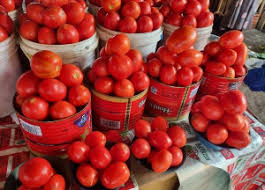
The Food and Beverages Association of Ghana (FABAG) has called for the dissolution of the Ministry of Food and Agriculture if it is unable to address the country’s tomato crisis within the next three months.
The association questioned the very relevance of the Ministry if it cannot ensure local tomato production within two to three months.
“If within two to three months the Ministry cannot organise tomato production under irrigation across the country, then the government must seriously consider restructuring the Ministry into a Production-Focused Agricultural Authority with clear targets and accountability”, FABAG made this known in a strongly worded statement released in Accra.
The warning comes as Ghana faces a looming tomato shortage following an export ban by Burkina Faso, a key supplier. The disruption has led to reduced supply and rising prices, exposing what FABAG describes as deep structural weaknesses in the country’s agricultural system.
FABAG described the unfolding shortage as a failure of planning and leadership within the Ministry of Food and Agriculture, insisting that Ghana has the capacity to produce sufficient tomatoes domestically if the right measures are implemented.
“It is completely unacceptable that a country with vast agricultural land, irrigation dams, agricultural colleges, research institutions, extension officers, and a full Ministry of Food and Agriculture cannot produce enough tomatoes to feed its own population and must depend on another country for such a basic food commodity,” the statement said.
FABAG argued that the crisis highlights the country’s long-standing dependence on imports for essential food items, despite its natural and institutional advantages in agriculture. The group maintained that tomatoes, as a short-cycle crop, present an immediate opportunity for local production to close the supply gap.
“It is an agricultural fact, not a theory, that tomatoes can be produced within two (2) to three (3) months,” the Association stated, adding that “with irrigation and proper seed varieties, tomatoes begin harvesting within 60 to 90 days after planting.”
The Association warned that any inability to resolve the shortage within this timeframe would amount to a fundamental failure of the sector’s leadership and policy direction.
“Therefore, any claim that Ghana cannot solve tomato shortages quickly is simply an admission of policy failure, planning failure, and leadership failure,” the statement added.
“If after all these resources, Ghana still cannot produce tomatoes to feed its people, then the problem is not farmers, not land, not climate, but the problem is leadership and policy direction,” the statement noted.
World Bank Intervention
Meanwhile The World Bank has secured a $20 million grant from the Dutch government to support interventions in Ghana’s tomato sector.
Speaking at a food security engagement in Accra, World Bank Agricultural Economist Dr. Ashwini Sebastian said the initiative will focus on strengthening supply chains, improving storage infrastructure, and boosting local production.
She added that the World Bank will collaborate closely with local tomato traders as it finalises plans for the intervention, including identifying key production zones for targeted support.
Comments are closed.