
STOP THE WITCH-HUNT! …Minority Demands End to Political Victimization of Ghanaian Businesses
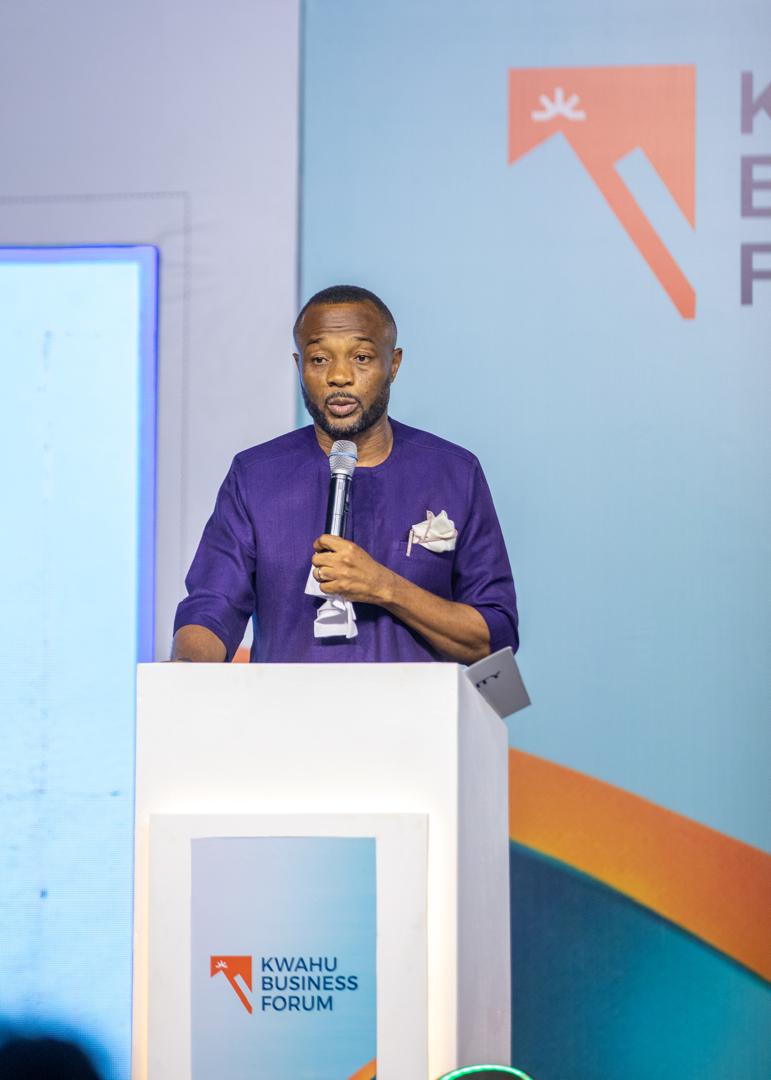
The Minority Caucus in Ghana’s Parliament has called for reforms to create a fair and competitive environment for Ghanaian entrepreneurs where business owners and investors are protected from political victimization on the basis of which political party they belong.
“The success of a business should never depend on which political regime is in power, nor should it be stifled by partisan labels. Our role as political leaders is not to frustrate private sector actors, but to foster a fair and enabling environment where merit, innovation and hard work is rewarded”, Jerry Ahmed Shaib, the Second Deputy Minority Whip noted in an official address at the Kwahu Business Forum, 2026 where he represented the Minority Leader, Osahen Afenyo-Markin.
Jerry Ahmed Shaib noted further: “When we politicise local enterprise, we create an uneven playing field that stifles innovation and discourages risk-taking. When this happens, it is foreign businesses that stand tall and dominate our markets while our indigenous enterprises are made to struggle. That cannot be the path to sustainable growth.”
He added: “And as we nurture this culture of enterprise, we must also take a hard look at how we extend opportunity particularly to the youth. They must be supported when they demonstrate potential, creativity and drive.”
Mr. Ahmed Shaib called for deliberate efforts to foster an ecosystem that rewards innovation and enterprise. He argues that a stable and predictable business climate is necessary to attract investment and encourage entrepreneurship.
He said beyond depoliticisation of business enterprise, there is also the need to expand opportunities for young entrepreneurs and support emerging business leaders as a vital step to Ghana’s economic transformation.
The address called for stronger collaboration between political leaders, the financial sector and entrepreneurs to build a sustainable and inclusive economic future.
“To the financial sector, the Minority stands ready to work with you to create an environment where your institutions can become true engines of indigenous enterprise,” Jerry Ahmed Shaib added.
Stark Realities from Industry Engagements
The Minority Caucus, through the speech read by Jerry Ahmed Shaib, revealed findings from recent consultations with key industry bodies, including the Ghana Union of Traders Association, Association of Ghana Industries, and the Ghana Employers’ Association.
According to the address, Ghanaian businesses are grappling with a combination of high lending costs, limited access to credit, and short loan tenures that do not align with long-term investment needs. Despite a benchmark lending rate of 10.70%, many small and medium-sized enterprises (SMEs) are effectively locked out due to stringent collateral requirements and high effective borrowing costs.
The speech highlighted that between 60 and 80 percent of small businesses fail within their first five years, largely due to these financial constraints.
Rising Costs and Tax Burdens
On the issue of operational costs, the Minority cited data from the AGI indicating that many manufacturing firms are operating below capacity due to high energy costs. In some cases, the cost of production exceeds potential market returns.
Additionally, businesses face a cumulative tax burden from multiple levies, including VAT, excise duties, the National Health Insurance Levy (NHIL), and the GETFund Levy—all applied simultaneously on transactions.
“This is not a market problem. It is a policy problem,” the address asserted, criticising the government for increasing fiscal pressures without adequately consulting stakeholders or assessing the combined impact of these measures.
Concerns Over Port Assessment Systems
The speech also raised alarm over the implementation of an AI-driven customs assessment system at Ghana’s ports, which businesses claim has resulted in inflated and inconsistent duty charges.
Without an effective appeals mechanism, many compliant importers have reportedly faced significantly higher assessments than in previous years, creating uncertainty and financial strain.
Consultation Deficit
A recurring concern highlighted in the address was what the Minority described as a “consultation deficit” in policymaking. Industry stakeholders reported that policies are often developed and implemented without meaningful prior engagement, with consultations occurring only after decisions have been finalized.
The statement warned that this approach undermines effective economic governance and leads to poor policy outcomes, including reduced investment and job creation.
The Kwahu Business Forum, an initiative of the Chief of Staff, Julius Debrah, continues to position itself as a critical platform for dialogue between policymakers and the private sector.
The 2026 edition was a mega success attended by industry giants, policy makers, and the President himself, John Dramani Mahama. Discussions largely reinforced the urgent need for reforms to support Ghanaian businesses in an increasingly challenging economic climate.
Comments are closed.