
Trade Minister cautions Abossey Okai dealers to reduce prices
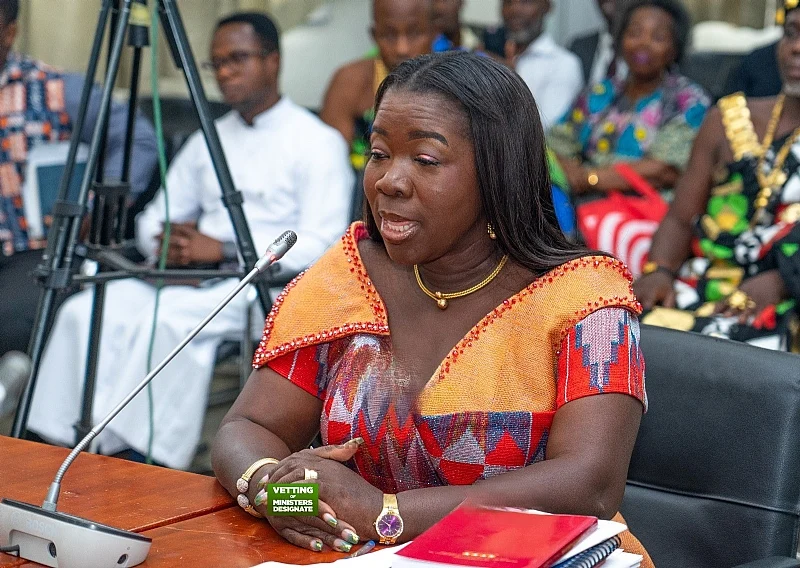
Minister for Trade, Agribusiness and Industry, Elizabeth Ofosu-Adjare, has urged spare parts dealers at Abossey Okai to further cut prices in line with Ghana’s improving macroeconomic fundamentals.
She cited the sustained appreciation of the cedi as a key driver, noting that the exchange rate has strengthened from levels of about 17 cedis to the US dollar to around 12 cedis, significantly easing foreign exchange pressures on imports and creating room for downward price adjustments.
The Minister also referenced recent fiscal policy measures, including the scrapping of the COVID-19 levy in the 2026 Budget, which she said is expected to lower the effective import cost structure and reduce the overall tax burden on imported spare parts.
Speaking to the media after an engagement with spare part dealers at Abossey Okai, Elizabeth Ofosu-Adjare observed that prices of some spare parts and related items have already declined, reflecting improving cost conditions.
She reaffirmed government’s commitment to maintaining exchange rate stability, fiscal consolidation and broader macroeconomic gains and urged traders to fully pass on these benefits to consumers through more competitive pricing in the months ahead.
“In 2024, the dollar went up to $1 to 17 Cedis. Now, it’s under $12 and so there shouldn’t be any justification why prices will remain the same or go up. This is about my 5th interaction with traders at different levels. Early 2025, when the dollar started going up or down, I invited the traders and we had a conversation and they gave me up to 4 months to reduce prices.
“True to their words, after 4 months, a lot of things were reduced, especially tomatoes, rice, oil and all of those things and even some spare parts. After further discussion, we have realized that some traders have still not reduced their price to reflect their strength in the cedi.
“In all fairness to people here in Abossey Okai, about 80% of the people I spoke to have reduced their price and I am here with some drivers and they are attesting to that. A few have not reduced their prices to reflect the gains that the cedi has made. So, we have discussed and I am excited at the reception.
“I am also grateful for the fact that they say, when I come back, I will see improvement in their prices. I also think that the prices will go down anyway because you see, now there is no COVID levy so, import duty will come down as a matter of course.
“From February, March, thereabouts, I am expecting prices to even be better than what I’m seeing now. But generally, I think that their prices are good,” Elizabeth Ofosu-Adjare said.
The Minister further advised vehicle owners to procure spare parts directly from dealers rather than through intermediaries, noting that the activities of middlemen often inflate costs and distort pricing signals, even in an environment where spare part prices have declined significantly.
She also pledged that government will engage stakeholders to address the concerns of Sprinter bus spare parts dealers, as part of broader efforts to improve market efficiency and ensure fair pricing across the automotive spare parts value chain.
“Do not use middlemen. I have come to know that middlemen inflate the prices for you and give the people of Abossey Okai a bad name. Let’s try it. Let’s do the purchases ourselves and see whether we will see the price decrease that they have mentioned. Right now, all the people I spoke to, even some of the Sprinter traders, they have told me that they have reduced their prices, but mechanics come and give different prices.
“I am not saying all mechanics, but they have been mentioned and so, I have to say come with your mechanic, do the discussion, and don’t go to one shop. In a free market economy, you shop around if you want good deals,” the minister advised.
Meanwhile, Chairman of the Abossey Okai Spare Parts Dealers Association Henry Okyere Jnr., has assured of sustained and coordinated efforts to ensure members continue to adjust prices downward in line with prevailing market conditions.
“We are moving from store to store to ensure that we educate our members for them to understand that the dollar is stable now and the duties are down.
“So they should also bring their prices down so everybody can see it in the market. So we should give it about maybe another 30 days, a month to see how things are working out,” he said.
Comments are closed.