
Trump says he will increase his new global tariffs to 15%
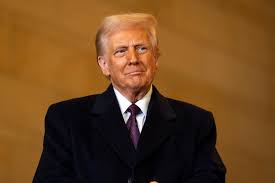
US President Donald Trump has said he will impose global tariffs of 15%, as he has continued to rail against a Supreme Court ruling that struck down his previous import taxes.
Trump said on Friday that he would replace the tariffs scrapped by the court with a 10% levy on all goods coming into the US.
But on Saturday, he announced on Truth Social that this would be increased to the maximum allowed under a never-used trade law.
That law allows these new tariffs to stay in place for around five months before the administration must seek congressional approval.
The 10% tariffs were set to come into force on Tuesday, 24 February. It’s unclear if the increased 15% would also be imposed starting then. The BBC has contacted the White House.
The new 15% tax rate – a temporary solution under Section 122 of the 1974 Trade Act – raises questions for countries such as the UK and Australia, which had agreed a 10% tariff deal with the US.
Trump said his administration had reached the decision to raise the levy following a review of the Supreme Court’s “ridiculous, poorly written, and extraordinarily anti-American decision on Tariffs issued yesterday”.
In a 6-3 decision, justices on the highest US court found that the president had overstepped his powers when he introduced sweeping global tariffs last year using a 1977 law known as the International Emergency Economic Powers Act (IEEPA).
The US has already collected at least $130bn (£96.4bn) in tariffs using IEEPA, according to the most recent government data.
Immediately following the ruling, Trump said that he was “ashamed of certain members of the court” and called the justices who rejected his trade policy “fools”.
Trump’s tariffs are a key plank of his economic policy, which he has said will encourage businesses to invest and produce goods in the US rather than overseas. But the high court’s decision marked a significant check on his power and a major blow to his second-term agenda.
The US president has argued his tariffs are necessary to reduce the trade deficit – the amount by which imports exceed exports – but the US trade deficit reached a fresh high this week, widening by 2.1% compared to 2024 and hitting roughly $1.2 trillion (£890bn).
Drew Greenblatt, owner of Marlin Steel Wire Products, a steel fabrication plant in Baltimore, said he was “very disappointed” by the Supreme Court’s decision.
“It is a setback for poor people in America that had a chance to climb into the middle class with great manufacturing jobs,” he told the BBC.
But John Boyd, a soybean farmer from Virginia and founder of the National Black Farmers Association, said: “This is a huge win for me and a big loss for the president.
“I don’t care how you look at it, President Trump lost on this.”
Yet Allie Renison, a former UK government trade adviser and director at SEC Newgate, said: “While it may seem like a good day for free trade, I think trade actually just got a lot messier.”
She said that businesses are now facing “much more of a patchwork approach” to tariffs under the Trump administration.
It means that US businesses will have to pay a 15% tariff to import most goods into America under Section 122 of the Trade Act of 1974.
But some products will be exempted such as critical minerals, metals and pharmaceuticals.
Meanwhile, separate tariffs on steel, aluminium, lumber and automotive parts and sectors – introduced using a different US law – remain in place, untouched by the Supreme Court’s ruling.
On Friday, a White House official said countries that previously reached trade deals with the US, including the UK, would face the global tariff under Section 122 rather than the tariff rate they had previously negotiated.
However, the UK’s deals around steel, aluminium, pharmaceuticals, autos, and aerospace sectors – which represent most of its trade with the US – were not impacted.
The UK government said it expects Britain’s “privileged trading position with the US” to continue and that it is a “matter for the US to determine” whether those deals still stand.
William Bain, head of trade policy at the British Chambers of Commerce, has said he feared that the president’s response to the Supreme Court ruling “could be worse for British businesses”.
The new 15% import tariffs are “bad for trade, bad for US consumers and businesses” and will “weaken global economic growth”, the leader of a UK business group said.
The chairman of the European Parliament International Trade Committee told BBC Newshour he would call for a pause in ratifying a trade deal between the EU and US after Trump’s announcement.
The committee was due to vote on the deal on Tuesday, but German Social Democrat MEP Bernd Lange said fresh tariffs raised “several issues” that needed clarifying.
Source: BBC
Comments are closed.