
Economy Growing Well, Not Starving – Forson Reads Out the Receipts
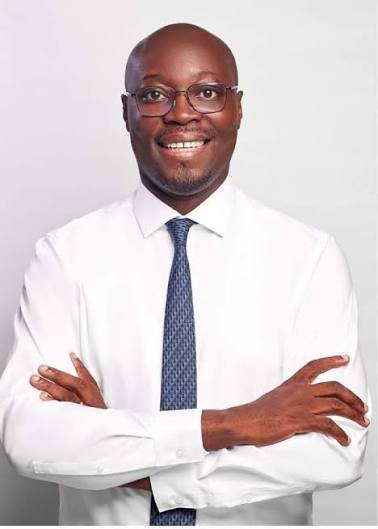
Finance Minister Dr. Cassiel Ato Forson has presented a detailed account of government expenditure, defending the administration’s spending record against criticisms that it is starving the economy.
Presenting the 2026 Mid-Year Budget Review in Parliament last Thursday, Dr. Ato Forson rejected claims that the government is not spending enough, stating that the administration is deploying resources “steadily and responsibly”.
“Nothing could be farther from the truth,” he declared, emphasising that every cedi is being spent wisely with the nation’s future firmly in view.
The Finance Minister provided a comprehensive breakdown of expenditure across all major sectors, with public sector compensation taking the largest share. He disclosed that GH¢48.8 billion has been paid to public sector workers, including GH¢4 billion in contributions to SSNIT and the Tier 2 Pension Scheme.
Debt Obligations and Financial Sector
To maintain fiscal credibility, the government paid GH¢21.5 billion in domestic interest obligations and US$700 million to service Eurobond debt. An additional GH¢10 billion was disbursed to domestic bondholders to restore confidence in the financial system.
Healthcare and Social Protection
Significant allocations were made to protect the vulnerable. The National Health Insurance Scheme received GH¢4.5 billion, while GH¢1.1 billion was allocated to the MahamaCares programme for specialised healthcare.
The government released GH¢485 million to beneficiaries of the Livelihood Empowerment Against Poverty (LEAP) programme, while GH¢877 million supported the Ghana School Feeding Programme to provide nutritious meals for schoolchildren.
Education Sector
In education, GH¢4.2 billion was channelled to the Ghana Education Trust Fund (GETFund), while GH¢1.8 billion supported the Free Secondary Education Programme. The government also paid GH¢46 million for BECE registration fees and GH¢537 million under the “No Fees Stress Policy” for tertiary students.
Allowances totalling GH¢104 million and GH¢144 million were paid to teacher and nursing trainees respectively.
Infrastructure and Energy
The government invested GH¢11.5 billion in capital expenditure and GH¢6.5 billion in the “Big Push” Infrastructure Programme. The energy sector received GH¢7.1 billion to ensure stable power supply, while road maintenance was bolstered with GH¢1.7 billion from the Road Maintenance Trust Fund.
Agriculture and Youth Employment
The agricultural sector received GH¢1.1 billion for flagship programmes including the National Food Buffer Stock Company, fertiliser distribution, and irrigation infrastructure. An additional GH¢551 million was placed in an escrow account to support the establishment of Farmer Service Centers.
The Youth Employment Agency received GH¢459 million to support job creation, while GH¢45 million was dedicated to the National Apprenticeship Programme.
Local Governance and Environmental Protection
To deepen fiscal decentralisation, GH¢4.4 billion was sent to the District Assemblies Common Fund, while GH¢93 million was paid as allowances to Assembly Members.
The government allocated GH¢16 million to the National Anti-Illegal Mining Operations Secretariat (NAIMOS) to combat illegal mining and protect rivers, forests, and agricultural lands.
World Cup Participation and Legacy Arrears
GH¢58 million was disbursed to support Ghana’s participation in the 2026 FIFA World Cup. The government will recover this amount once FIFA releases Ghana’s appearance fee. Parliament had initially approved GH¢150 million for the campaign, based on the assumption the Black Stars would reach the final.
The government also paid GH¢5.3 billion to clear legacy arrears accumulated under the previous administration.
Defending Fiscal Discipline
Dr Forson insisted that the government remains bound by commitments made under the International Monetary Fund programme negotiated by the previous administration, which requires a primary surplus of 1.5% of GDP.
“The NPP committed Ghana into an IMF programme, signed an agreement with the IMF and borrowed $3 billion from them, and committed us, this government, that we would do 1.5% of GDP,” he stated.
He warned that abandoning fiscal discipline would reverse the economic gains made so far. “Do you want me to spend and derail the IMF programme? Is that what they want me to do?” he asked.
According to the Minister, meeting these targets has positioned Ghana for a successful exit from the IMF programme, with the country achieving all conditionalities.
He also noted that primary expenditure had been reduced from 18.7% of GDP in 2024 to 13.2% in 2025, and that Ghana had overcome what economists describe as the “original sin” – the inability to borrow long-term in its own currency – after successfully raising $2.7 billion through a seven-year cedi-denominated bond.
Comments are closed.